 Repair or Replace: Older Garage Doors in Salinas
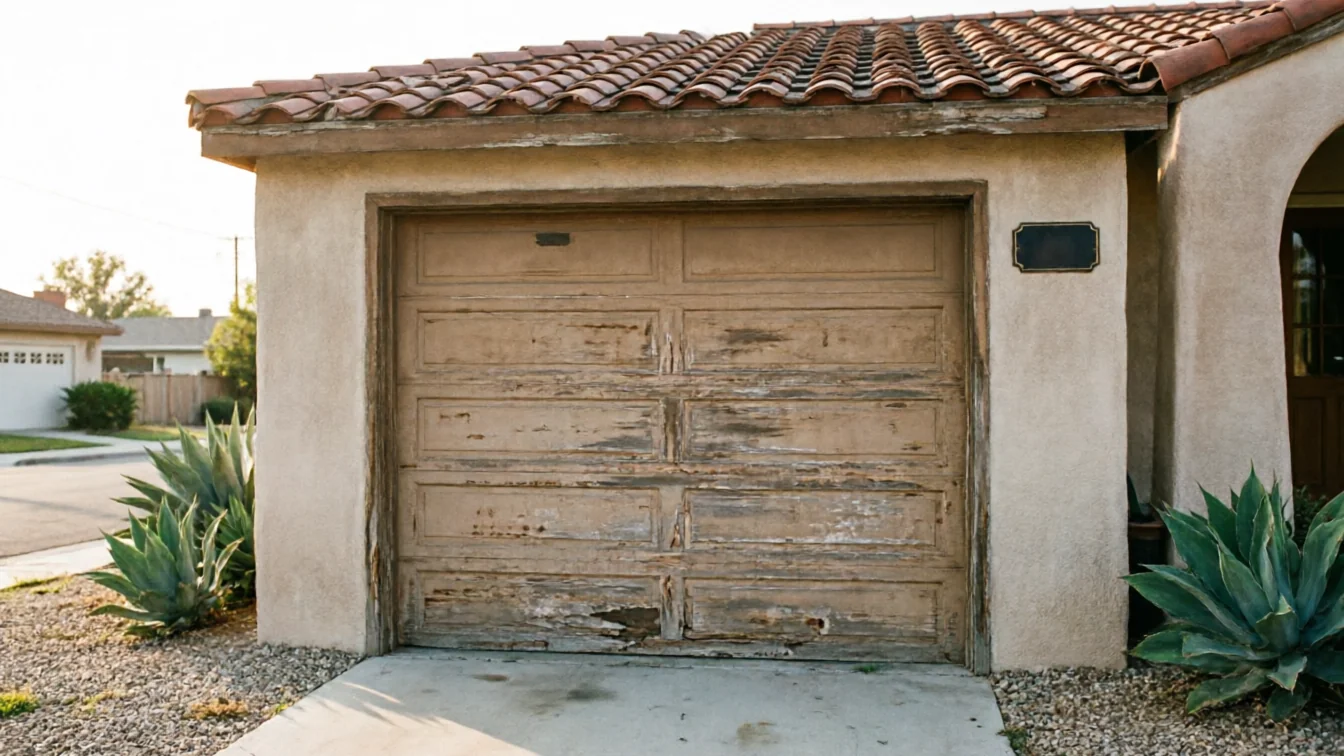
Salinas homes built 1946-2002 often still run original torsion hardware.
Why a Door Goes Off Track Here
Salinas homes built mostly 1946-2002 carry original track hardware. See why mild weather isn't the cause of most off-track doors here, and what is.
Local detail
What Most People Get Wrong
The usual guess is weather. Someone sees a rail bent or a roller hanging loose and assumes a storm knocked it sideways. That's not how it happens in a place with a mild temperate climate band like this one. There's no hard freeze that contracts metal overnight and pops a bracket loose, and no violent summer heat swings that warp a track in a season.
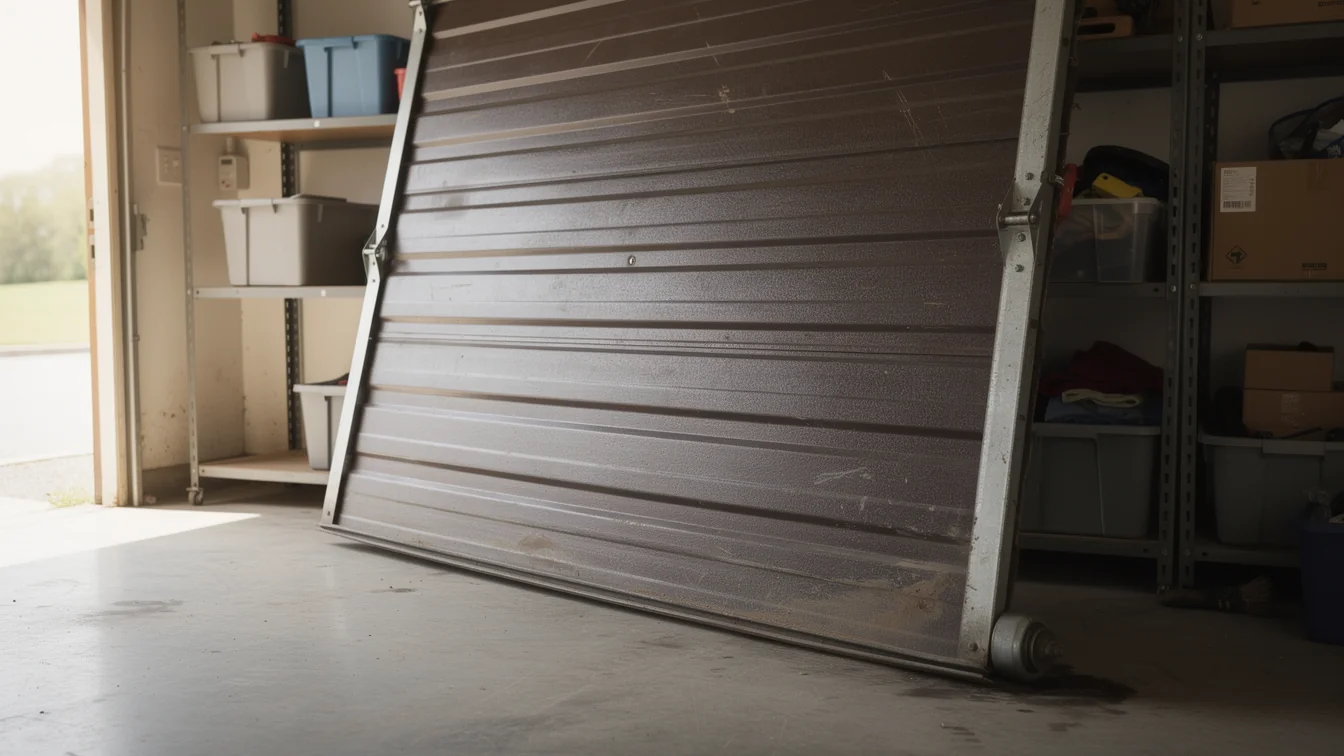
What actually knocks a door off track here is slower and more mechanical: a bracket that's been loosening bolt by bolt for years, a roller that's worn down to a nub and started riding the edge of the rail instead of the center, or a cable that's stretched just enough to pull one side of the door a half-inch out of plumb. None of that is dramatic. It builds quietly until the day the door catches on the rail and won't close.
The other wrong guess is that a door off track means a door that needs to be replaced. Most of the time the track itself is fine. It's the hardware holding it to the jamb, or the rollers running inside it, that's failed. Knowing the difference is the first thing that keeps a repair cheap instead of expensive.
The area
The Situation
Housing across this service area was mostly built between 1946 and 2002, with the median landing around 1976, and the bulk of it dates to the 1960s and 70s across the twenty named areas that make up the region. That matters because track hardware from that era wasn't built to the same tolerances as what's sold today. Galvanized steel brackets from a 1968 build don't flex the same way a modern pre-coated bracket does, and after fifty-plus years of garage door cycles, the lag screws holding them to the jamb have usually worked themselves looser than the homeowner realizes.
Across the roughly 31,775 owner-occupied houses in this service area, that pattern repeats itself door after door. It isn't one bad batch or one bad year of construction. It's the simple math of age: a door that's opened and closed two or three times a day for forty-plus years has put tens of thousands of cycles through brackets that were torqued once, by hand, in a different decade.
In a market where median household income runs $105,568, a lot of owners have the means to fix this properly rather than patch it, which usually means replacing worn track hardware outright instead of re-tightening bolts that will just work loose again.
What we find
What the Weather Here Does to It
This is the part that surprises people: in a mild temperate climate, weather is mostly not the reason a door goes off track. There's no deep freeze cycling metal brackets through contraction and expansion the way you'd see somewhere with real winters, and no extreme heat that softens weatherstripping and shifts a track's alignment in July.
That's not nothing, though. Mild weather means a door that's neglected doesn't get forced into obvious failure by a hard season, the way a bad bracket might snap loose during a cold snap elsewhere. Here, a loose bracket or a worn roller just keeps working marginally, quietly getting worse, with no weather event to flag it. Owners go years without noticing because nothing dramatic ever happens to make them look.
The honest limitation: I can't tell you a specific storm pattern or seasonal spike pushes doors off track in this area, because the data doesn't show one. What the data does show is steady wear tied to the age of the housing stock, not to weather extremes. If someone tells you your door came off track because of a cold front, that's not what's happening in this climate.
How we work
When It Stops Being a DIY Job
Tightening a loose bracket with a wrench is a reasonable thing to try yourself. Replacing a worn roller on a door that's still basically square is doable if you're patient and the door is disconnected from the opener first. Those are the fixes that work on hardware from any era.
Where it stops being a DIY job is when the track itself is bent, not just loose, or when one cable has stretched and the other hasn't, because then the door isn't just off track, it's racked, and forcing it back into the rail under spring tension is how people lose fingers. On original hardware from a 1960s or 70s build, it's also common for the bracket mounting holes in the jamb to have worn oversized from decades of vibration, which means a new bracket won't hold any better than the old one until that wood or framing gets addressed.
If you're looking at a door that won't move at all, one that's visibly crooked in the opening, or a spring that's audibly let go, that's a call-a-pro situation, not a weekend project.
Questions
Common questions
Why did my garage door suddenly come off the track with no warning?
It rarely happens with no warning. On houses from the 1960s-70s stock common in this area, it's usually the end of a slow process: a bracket that's been loosening for years or a roller worn thin finally lets the door slip sideways. The 'sudden' part is just when it became visible, not when it started.
Is the mild climate here easier on garage doors?
In one sense, yes. There's no hard freeze-thaw cycle stressing hardware the way colder regions see. But mild weather also means failing brackets or worn rollers don't get flagged by a dramatic weather event, so problems tend to go unnoticed longer here than in a place with harsher seasons.
Should I just replace the whole track system?
Only if the track itself is bent or the jamb mounting holes have worn oversized, which is common on original hardware from 1960s-70s construction. If the track is straight and it's just a loose bracket or worn roller, repairing those parts is the cheaper and usually correct call.
Recommendation
You Might Also Like
More garage door guides for Salinas homeowners.
Repair or Replace: Older Garage Doors in Salinas
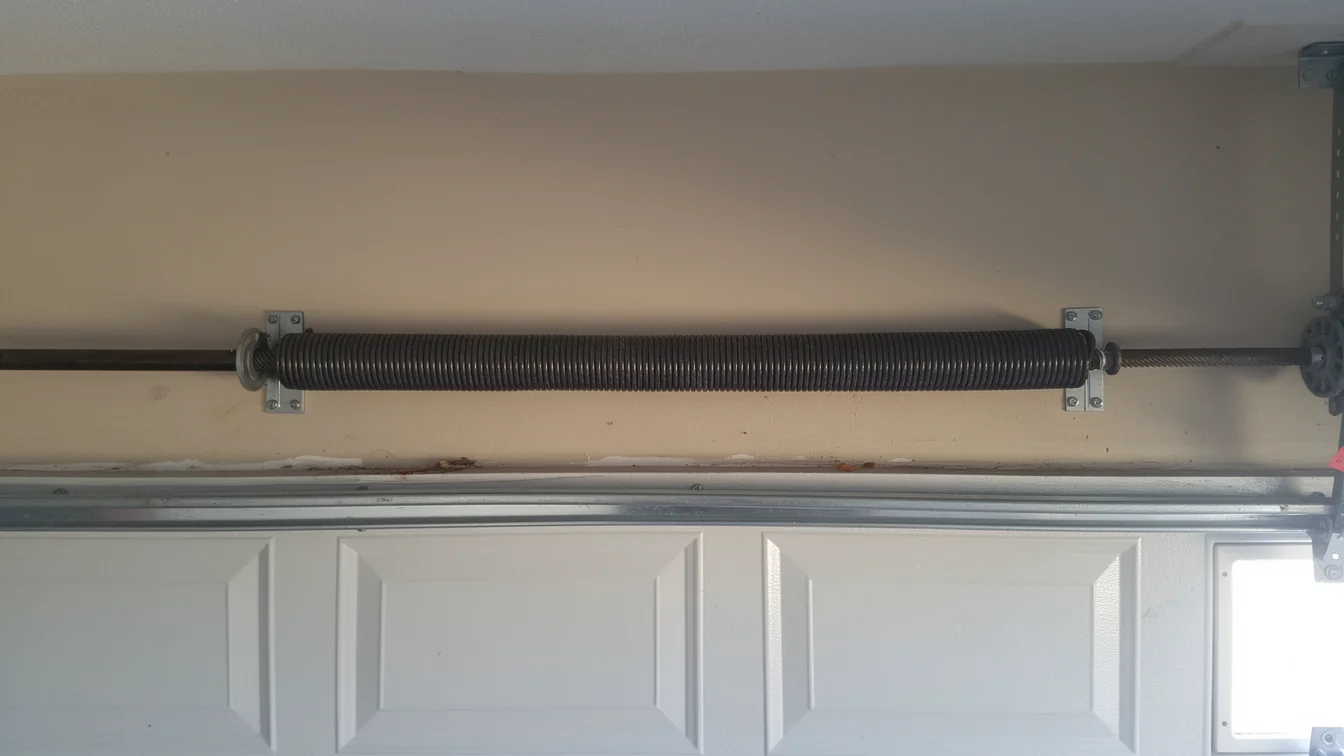
Salinas homes built 1946-2002 often still run original torsion hardware.
 Garage Door Repair Built Around How Salinas Houses Were Actually Built
Salinas garage door repair for houses built 1946-2002, mostly 1960s-70s stock, in a mild temperate climate.
 What Salinas's Housing Stock Means for Your Garage Door
Most Salinas homes were built between 1946 and 2002, in a mild coastal climate that still wears out torsion springs, openers, and rollers over the decades.
Ready when you are
Need a garage door sorted in Salinas?
Salinas Garage Door Pros repairs and installs garage doors, springs and openers in Salinas, CA and the surrounding area.