
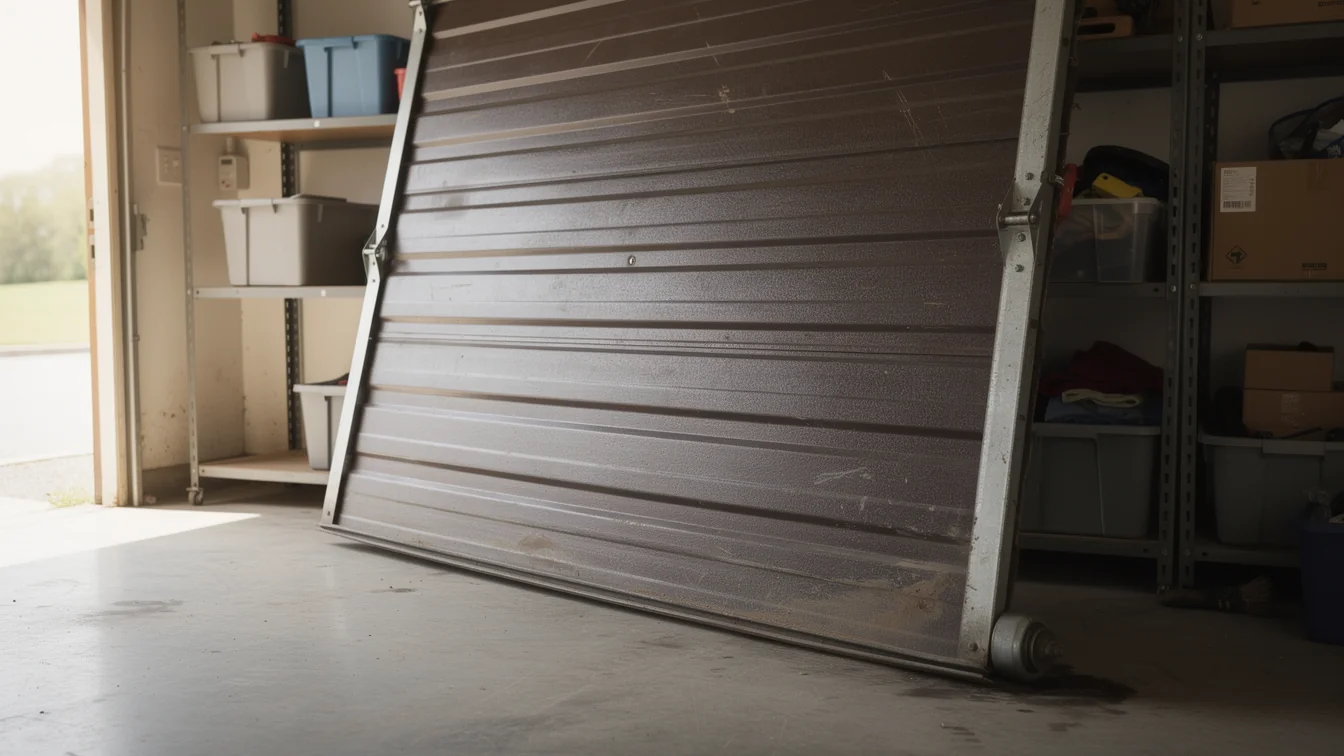
 Why a Door Goes Off Track Here
Salinas homes built mostly 1946-2002 carry original track hardware.
Repair or Replace: Older Garage Doors in Salinas
Salinas homes built 1946-2002 often still run original torsion hardware. Here's how to tell if yours is worth repairing or ready for full replacement.
Local detail
What Most People Get Wrong
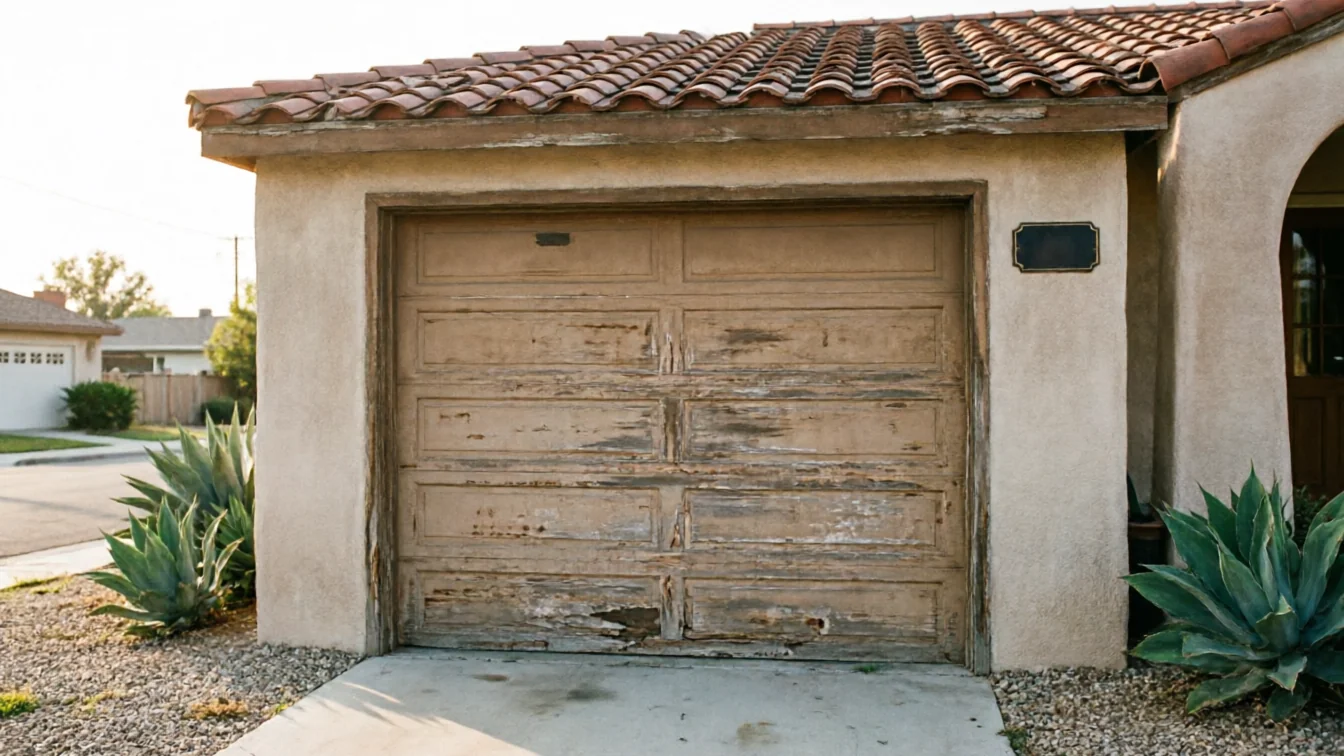
Most people see a dented, faded door and assume the whole unit is done. It usually isn't. Across this service area the housing stock runs 1946 to 2002, with the median landing around 1976, and most of that is 1960s-70s construction. A steel sectional door from that era was built heavier than what goes up today, and the panel itself often outlasts everything bolted to it.
What actually fails first is the hardware: the torsion spring, the rollers, the lift cables, sometimes the track brackets where the wood jamb has shrunk a little over fifty-plus years. None of that means the door is junk. A spring from 1976 isn't a 1976 spring anymore - it's been replaced at least once by whoever owned the house before - but the panel behind it can still be structurally sound steel.
The other mistake: treating every noisy door the same way regardless of age. A door from the 1990s and a door from the 1960s can both be loud, but what's loose, worn, or undersized is different, and a repair that's right for one can be the wrong fix for the other.
The area
The Situation
This area has 84,673 households and 31,775 owner-occupied houses, and the bulk of that stock dates to the 1960s and 70s, inside a broader build window of 1946 to 2002. That matters for garage doors because it tells you what you're opening the panel on before you ever touch a spring.
A house from the early part of that window likely has its original jamb and track brackets, possibly replaced once. A house from the later end - closer to 2002 - is more likely running factory hardware that's never been swapped, which usually means it's closer to the end of its working life right now, not years from it.
Median household income here sits at $105,568, which is worth mentioning because it changes the math on repair versus replace. A lot of households here can absorb a full door replacement if the panel's actually failing, rather than stretching a patch repair on a door that's fighting you every week. That's not true everywhere, and it's one of the reasons the same advice doesn't fit every town.
What we find
What the Weather Here Does to It
Salinas sits in a mild temperate climate band. That's a real advantage for garage doors compared to places with hard freeze-thaw cycles - the track doesn't contract and expand the way it does somewhere the ground actually freezes, so you don't see the cracked concrete aprons or frost-heaved slabs that tear a track loose in colder regions.
What the mild band doesn't protect against is corrosion from coastal moisture. Areas closer to the water, like Moss Landing and Marina, run into more of that than inland points like Chualar or Gonzales, and the difference shows up as rust on hinges and spring coils well before the steel panel itself gives out. If your house sits nearer the coast side of the service area, the hardware is probably aging faster than the door.
The upside of a mild climate is that a 1970s door with a few rust spots on the hinges is often still square and true. It hasn't been racked by freeze movement. That's the honest case for repairing instead of replacing - the bones are frequently fine, even when the finish isn't.
How we work
When It Stops Being a DIY Job
Spring tension on a torsion system can put someone in the hospital, full stop. If the door is original to a house built in that 1946-2002 window, the spring has almost certainly been replaced at least once already, and you likely don't know its wind count or cable routing. That's not a project for a Saturday afternoon and a socket set.
A door that's merely noisy - dry rollers, a loose bracket - is a reasonable DIY fix. A door with a broken cable, a bent track, or a spring that's let go is not, regardless of how old or new the panel is.
Here's the limitation worth saying plainly: if a door built before the 1970s has a panel that's rusted through or warped rather than just cosmetically rough, replacement usually beats repair on cost per year of service. We'd rather tell a homeowner that up front than sell a patch job on a door that's going to need the same call again in eighteen months.
Questions
Common questions
Is my garage door too old to repair?
Age alone doesn't decide it. Houses here built between 1946 and 2002 often have original steel panels that are still structurally sound even when the hardware - spring, cables, rollers - has already been replaced once or twice. What matters is whether the panel is rusted through or warped, not just the decade it was built.
Does Salinas's climate wear out garage doors faster?
The mild temperate band here is actually gentler on doors than a climate with hard freeze-thaw cycles - less track movement, less slab cracking. The exception is corrosion on hinges and spring coils in houses closer to the coast, which can age hardware faster than the panel itself.
Can I replace a torsion spring myself?
No. A wound torsion spring holds enough force to cause serious injury, and on an older door you usually don't know the prior wind count or cable routing. Dry rollers or a loose bracket are reasonable DIY fixes. A broken spring or cable is not.
Recommendation
You Might Also Like
More garage door guides for Salinas homeowners.
Why a Door Goes Off Track Here
Salinas homes built mostly 1946-2002 carry original track hardware.
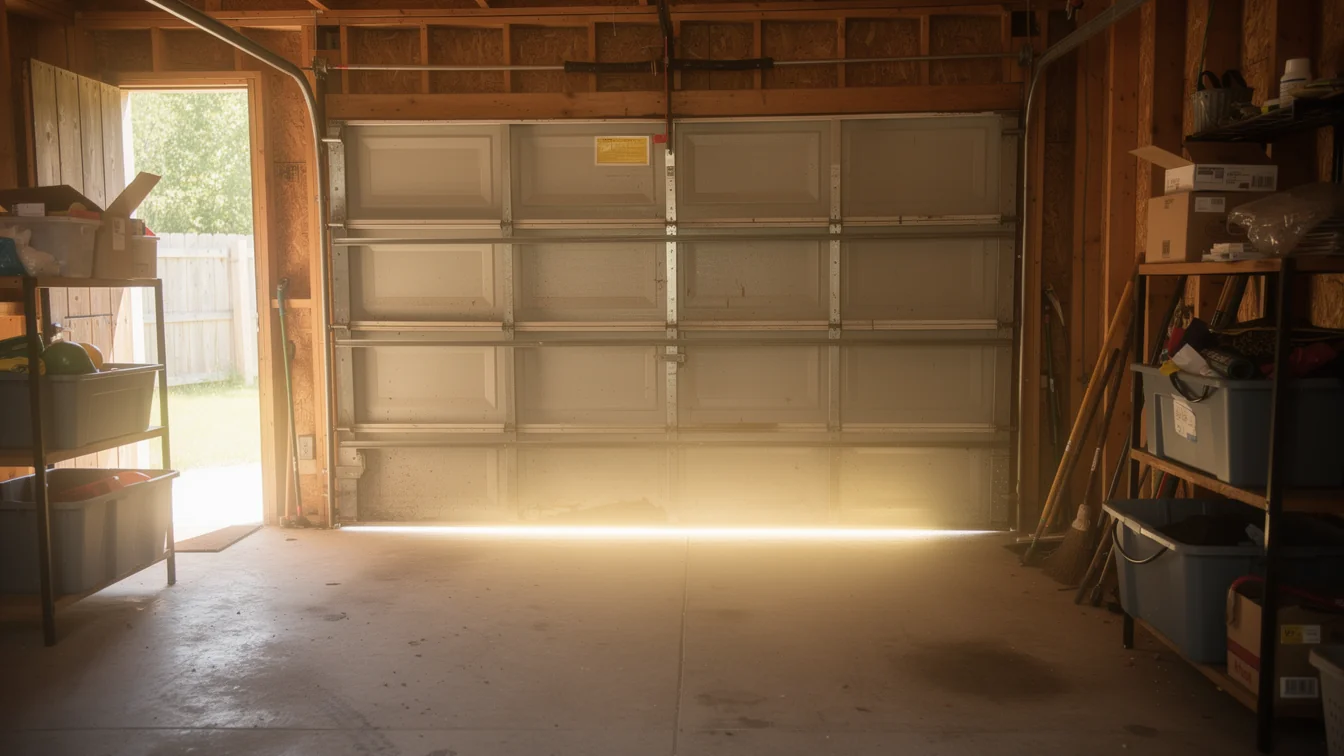 What Salinas's Housing Stock Means for Your Garage Door
Most Salinas homes were built between 1946 and 2002, in a mild coastal climate that still wears out torsion springs, openers, and rollers over the decades.
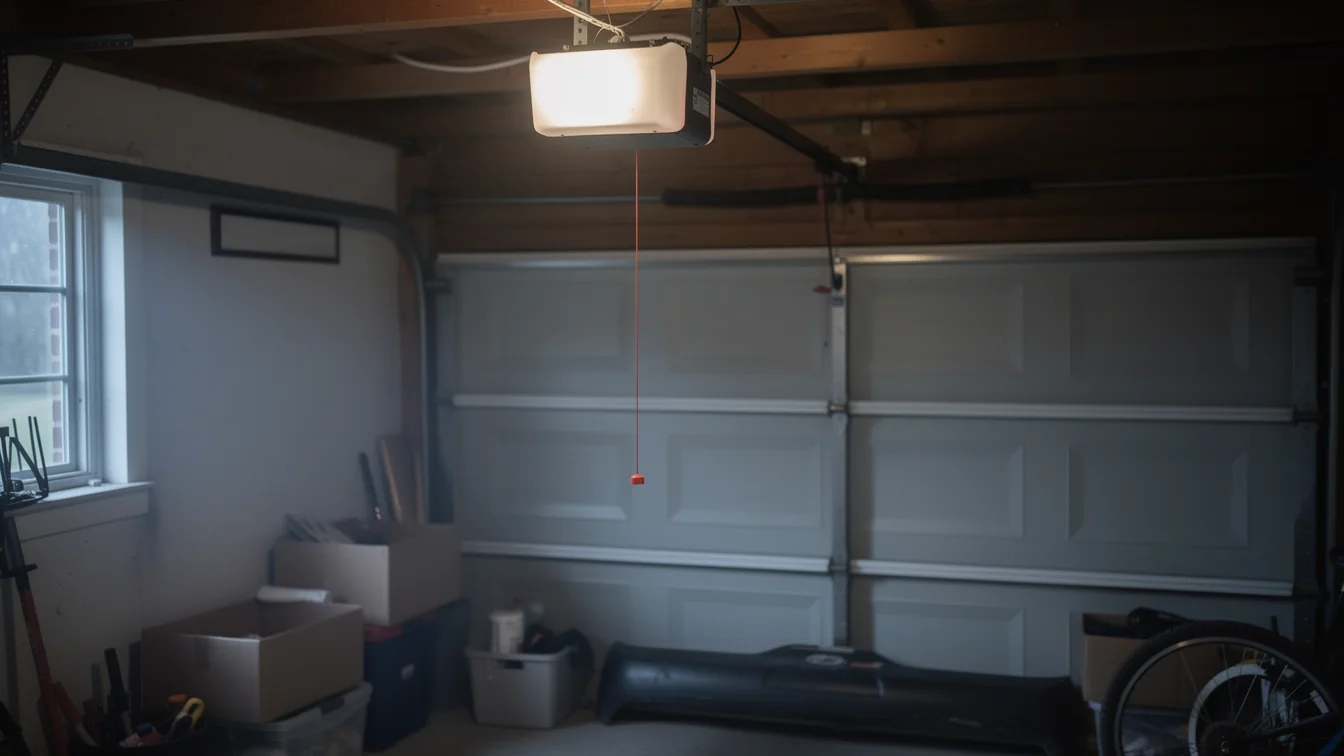 Openers and Power Cuts in Salinas Homes
Most Salinas garage doors date to the 1960s-70s building boom.
Ready when you are
Need a garage door sorted in Salinas?
Salinas Garage Door Pros repairs and installs garage doors, springs and openers in Salinas, CA and the surrounding area.