Why It Happens Here
Castroville's housing stock clusters tightly around a 1975 median build year, which means a large share of doors and openers in town are the same generation of hardware wearing out at close to the same time. That's different from a mixed-era suburb where failures are scattered - here, extension-spring fatigue and drum wear tend to show up in waves as houses from the same building period hit the same age threshold.
The mild temperate climate across this service area doesn't add the freeze-thaw stress that cracks seals or seizes hardware the way a harsher climate would, so when a door fails here it's almost always wear, not weather. With 1,531 households in Castroville, that's a smaller, steadier volume of calls than the larger towns in the service area, but the pattern - original-era springs reaching the end of their cycle count - is consistent.
Getting It Booked In
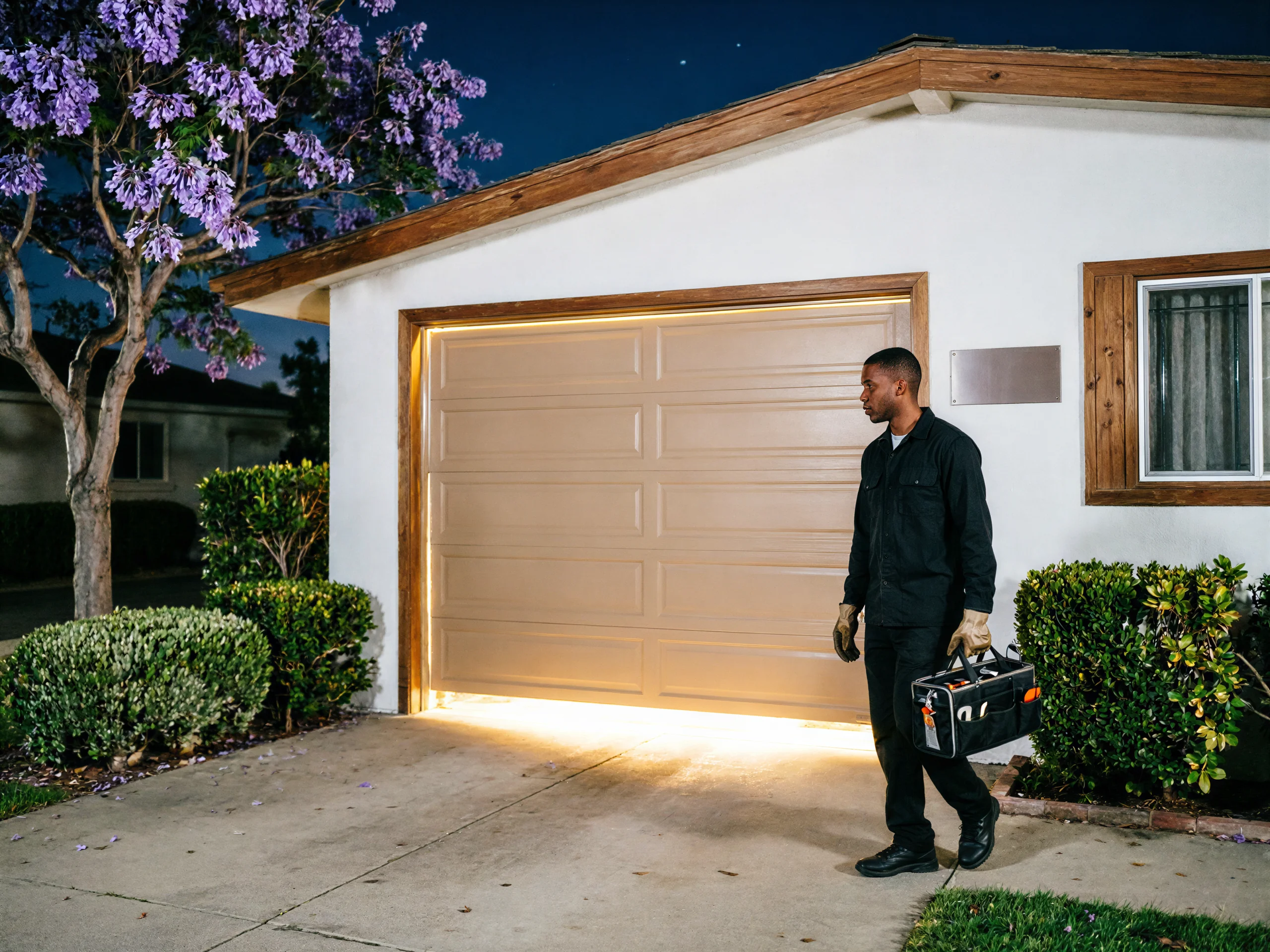
We run out of Salinas, 8 miles up the road, so when you call in with a dropped door or a snapped spring, we're not already parked around the corner.
Sound hints at the part
Tell us what you're seeing - a loud bang followed by the door stopping dead usually means a spring, a door that's crooked in the track usually means a cable - and we'll bring parts sized for the hardware this era of house actually uses, not a generic kit.
Trapped car gets priority
If your car is trapped inside, say so when you call; that changes how we prioritize the day. We'll ask the age of the house if you know it, since that alone narrows down whether we're likely dealing with extension springs or a later torsion retrofit before the truck even leaves.
Doing It Yourself
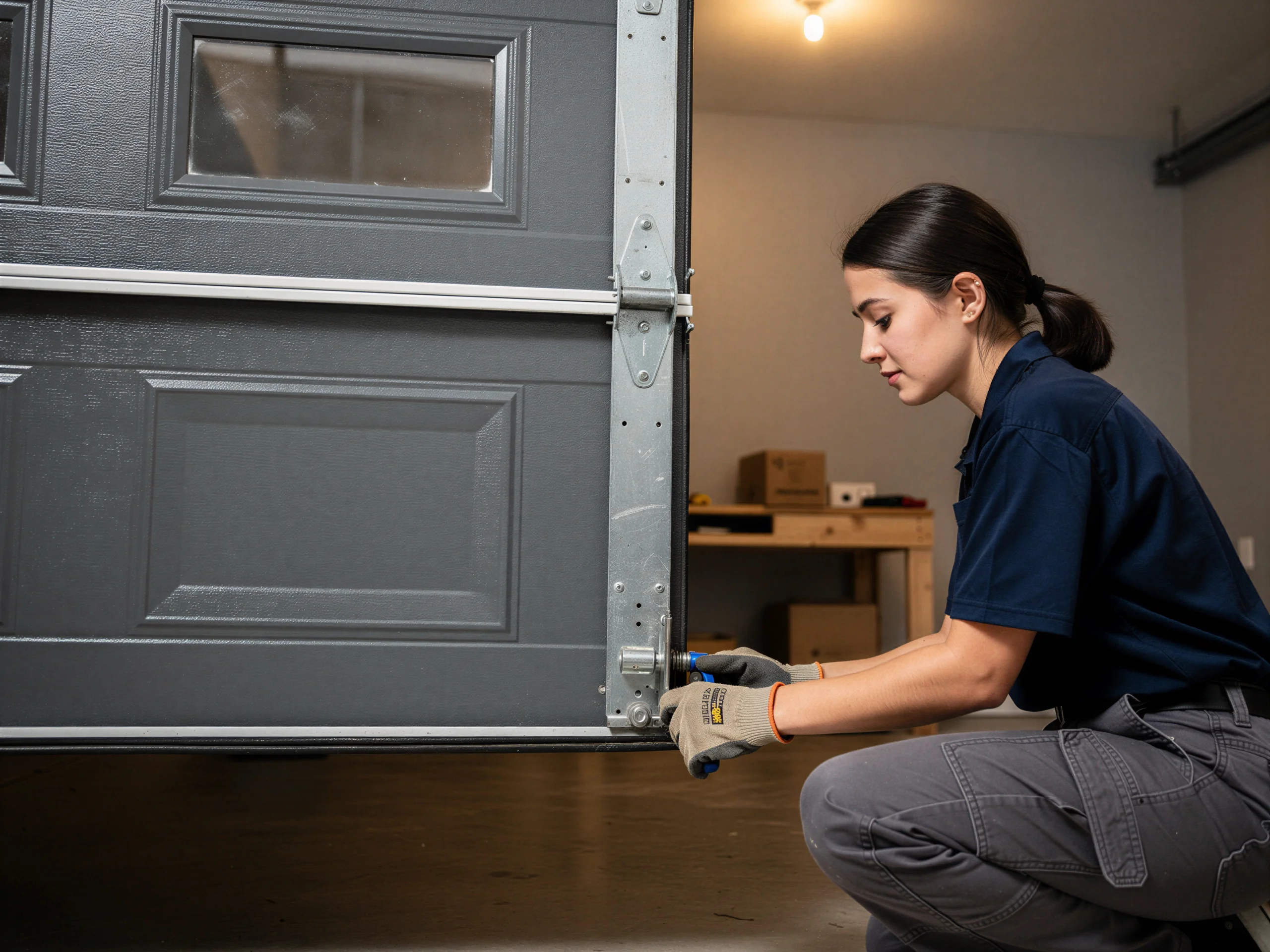
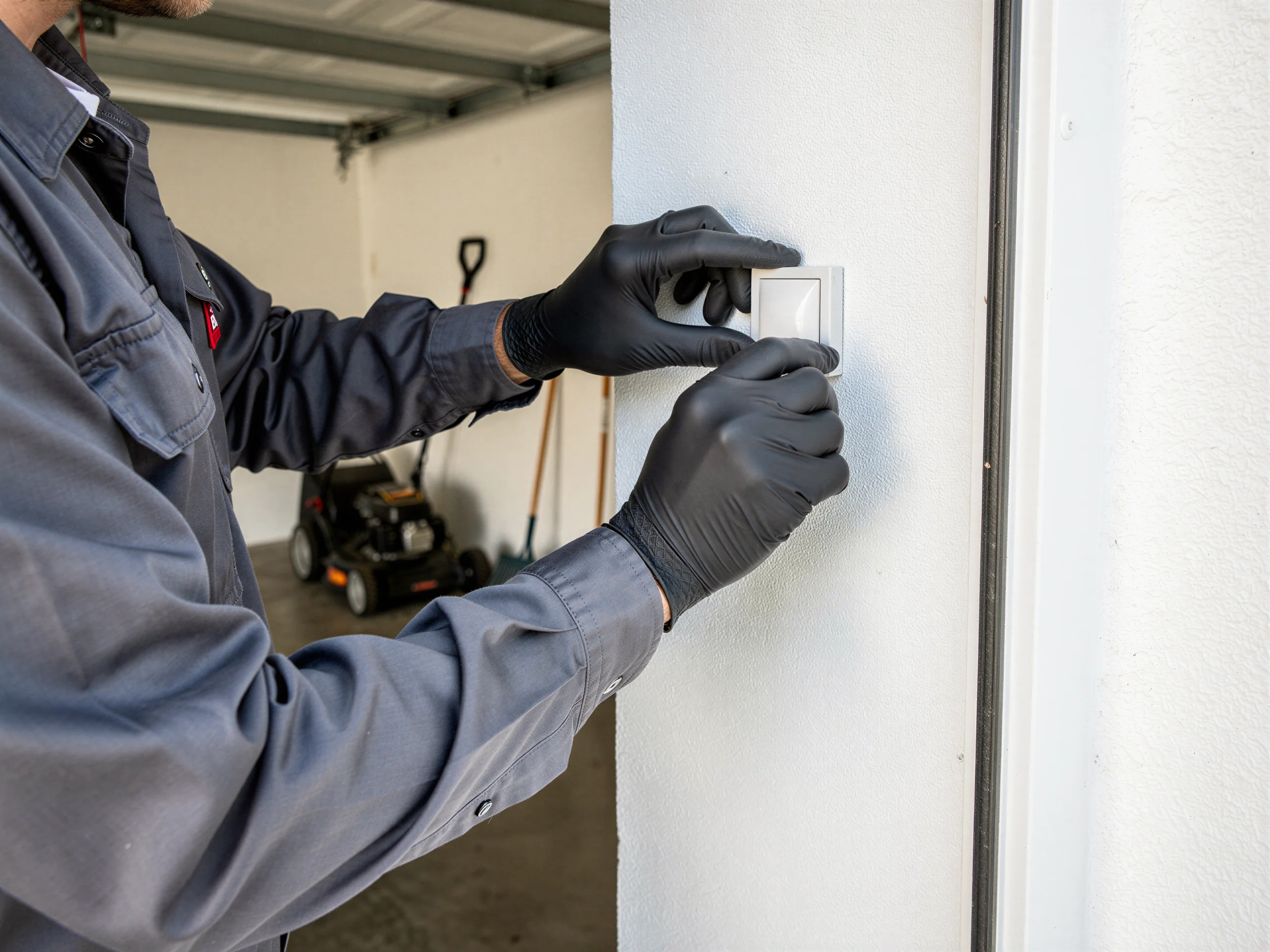
Don't touch a broken extension spring. They're under enough tension to cause a real injury if the cable lets go while you're near it, and on this era of hardware the mounting brackets are often rusted or stripped enough that even a straightforward-looking fix isn't. What you can safely do: disconnect the opener arm (there's a release cord on the trolley) and lift the door by hand to see if it's balanced - if it's heavy or uneven, that confirms a spring problem and you've just ruled out the opener.
We'll say the honest limit plainly: if the track is bent badly enough, or the door panel itself is cracked from being forced on a jammed track, replacement is usually cheaper over time than patching an original 1975 door that's already near the end of its service life. We'll tell you straight which side of that line you're on before we start charging for parts.
The Symptom
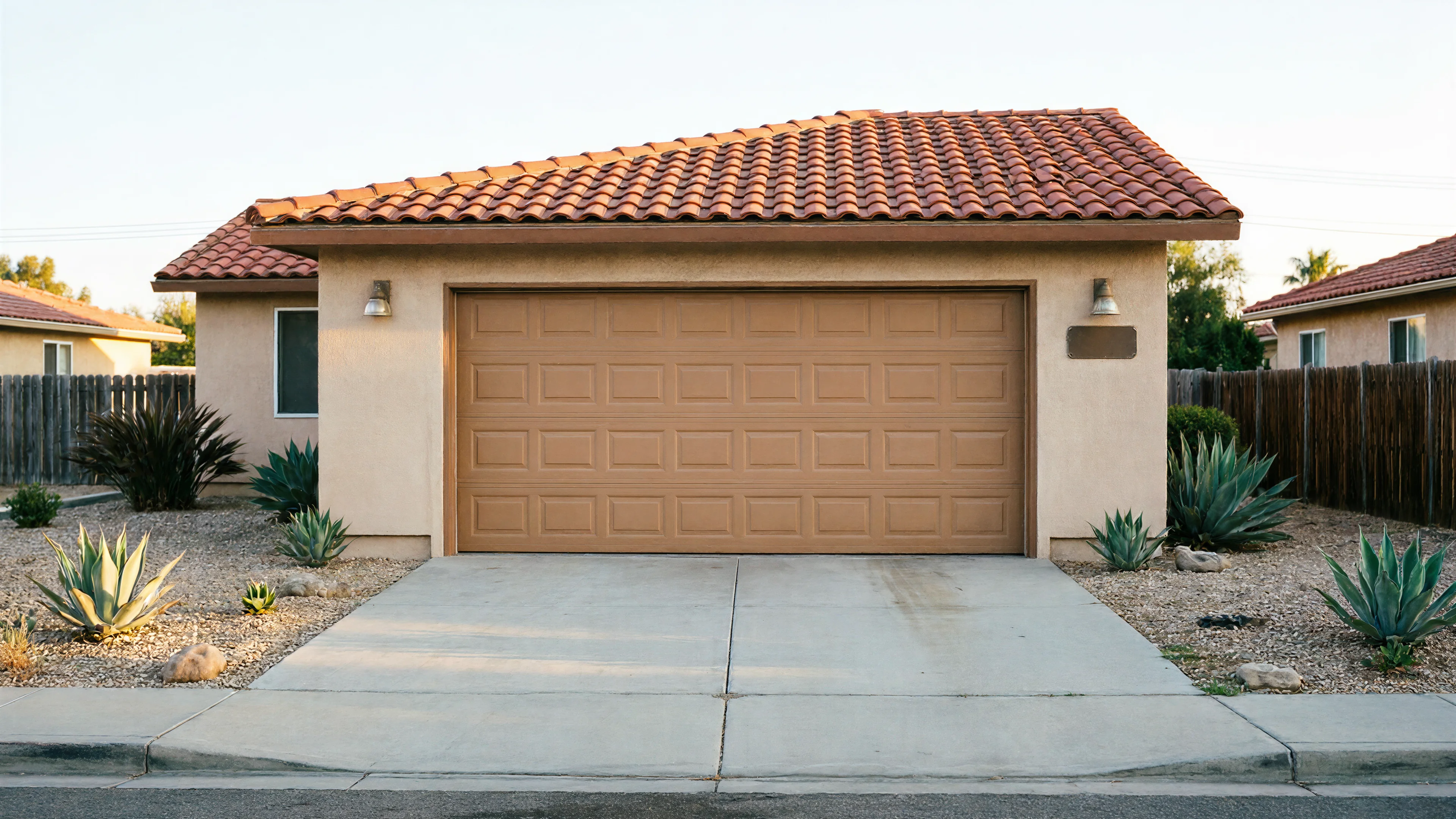
Most garage doors in Castroville are steel sectional panels hung on extension springs, the standard build for a house raised around 1975, which is the median year built here.
Side-mounted extension springs
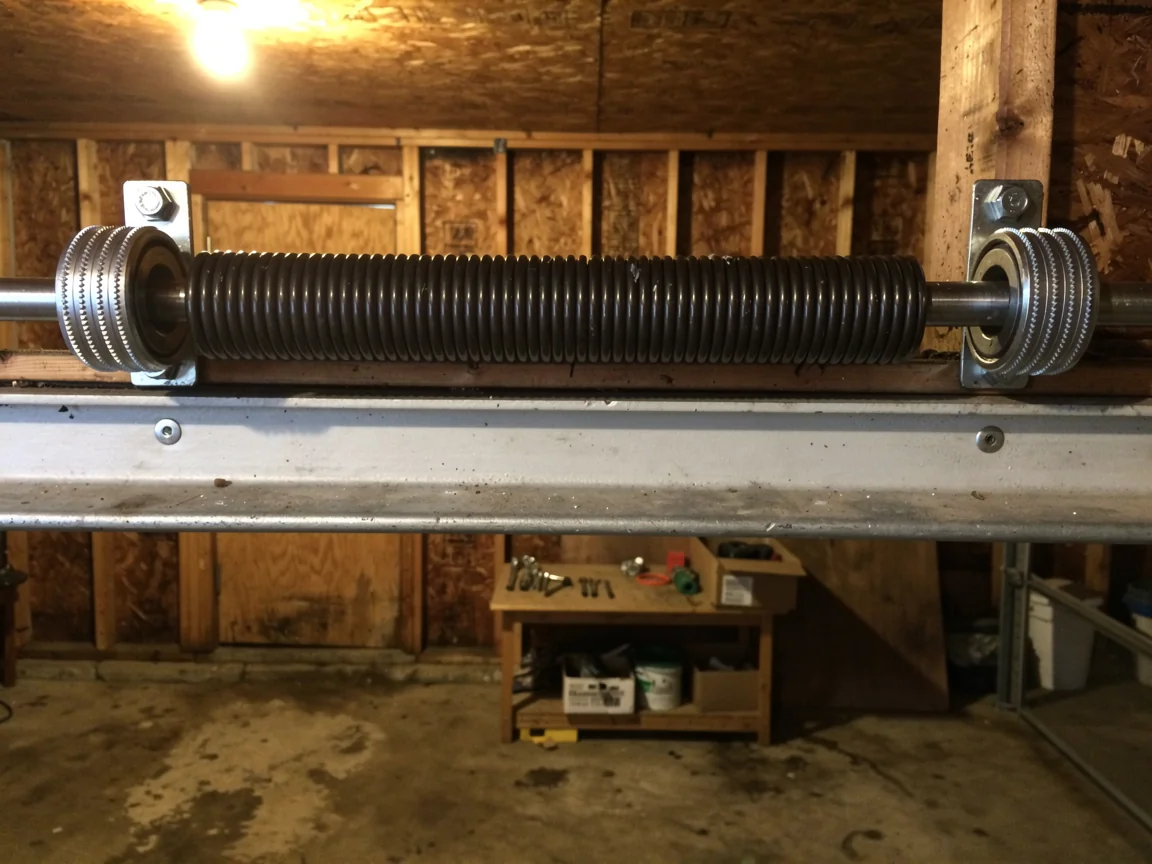
That's a single-car or two-car opening, galvanized steel skin over a wood or steel frame, and a pair of side-mounted extension springs doing the lifting instead of the torsion bar you'd find on a newer build.
Cocks sideways on drop
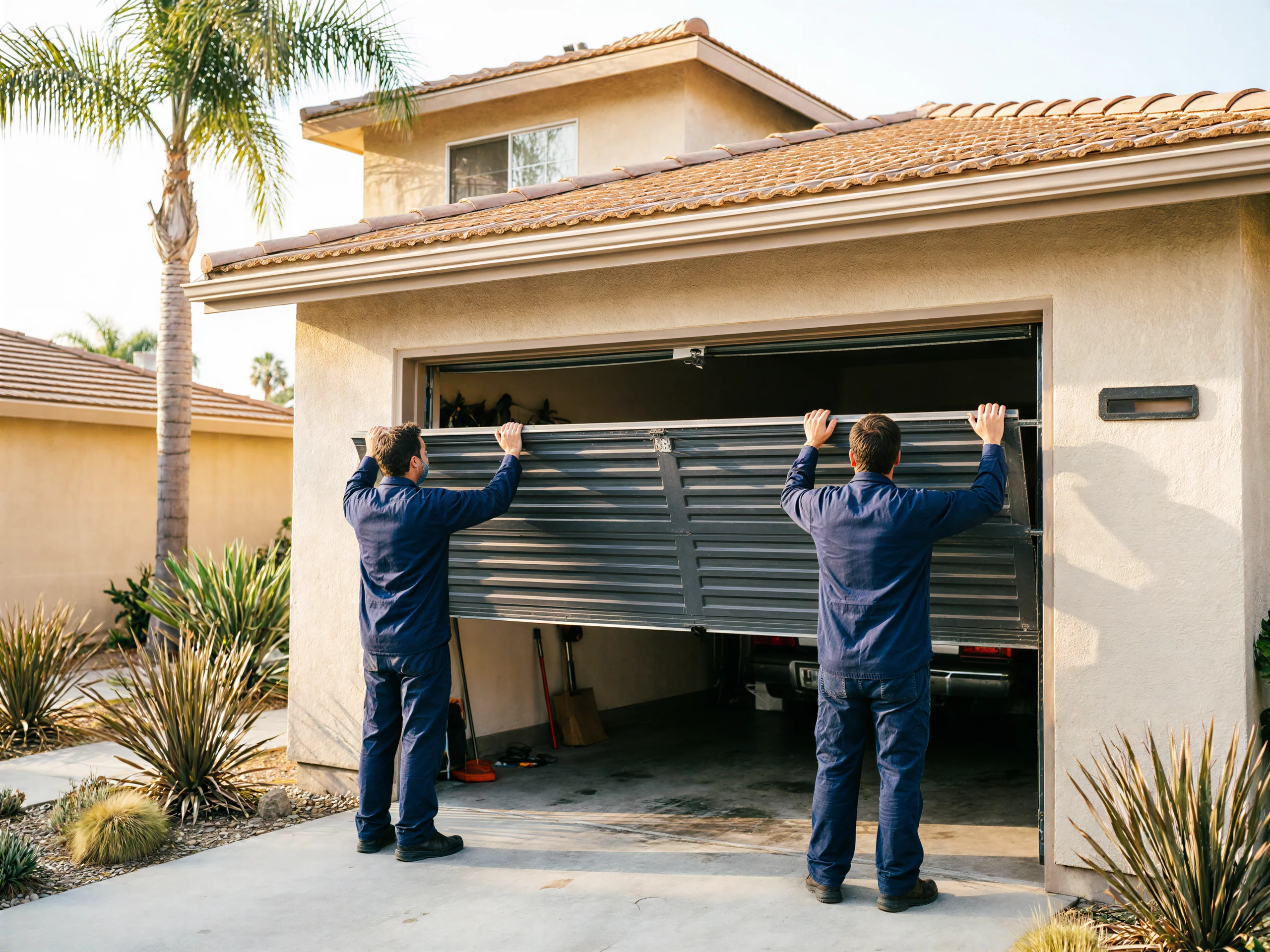
When one of those springs lets go, or a cable frays off the drum at the end of the track, the door doesn't ease down - it drops, fast, and sometimes cocks sideways in the track on the way. That's the call we get: a door stuck halfway, a door that slammed, or a door that won't budge because the opener is straining against dead weight it was never built to lift alone.
Same symptom varied cause
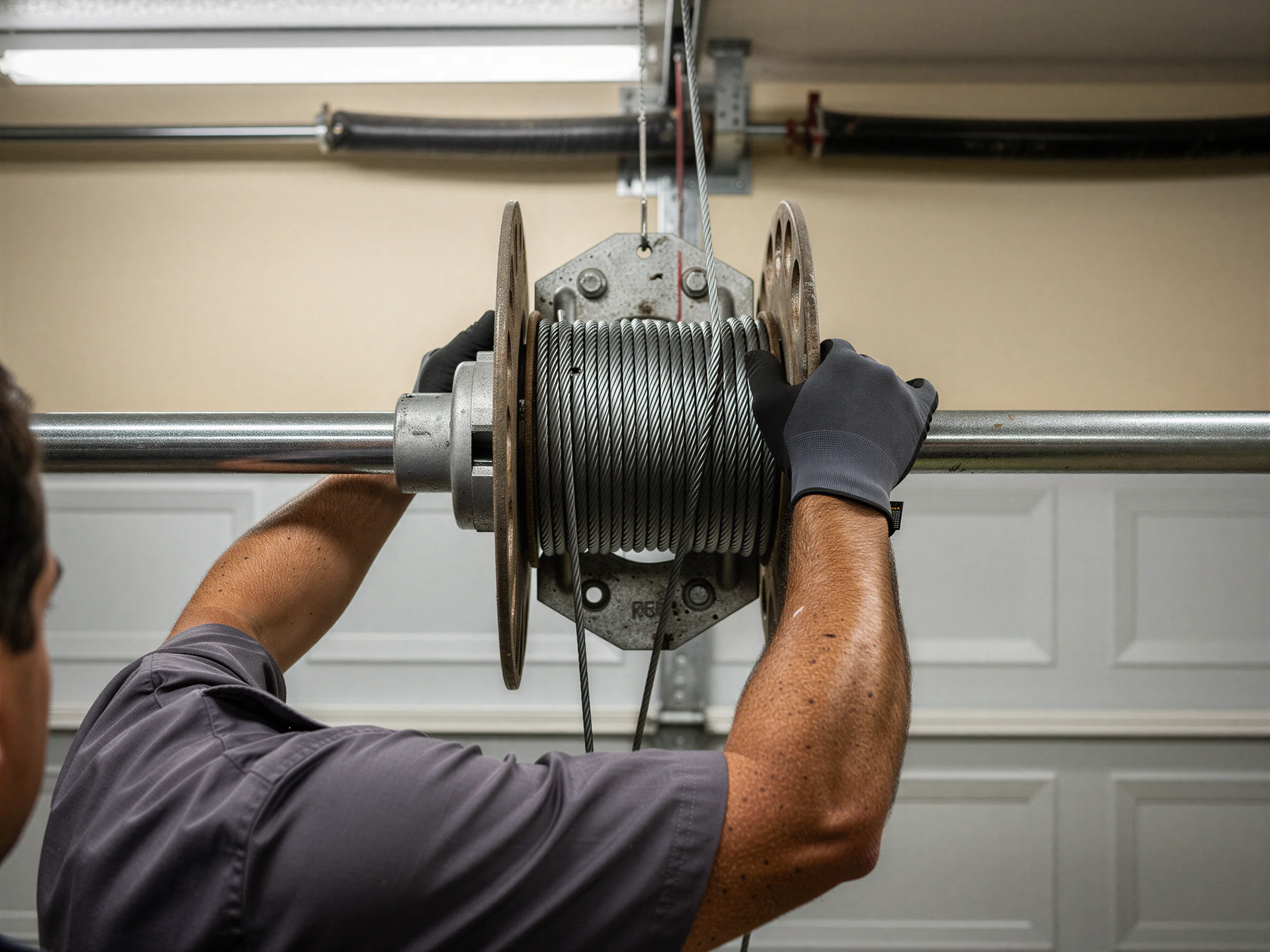
The symptom reads the same whether it's a spring, a cable, or a bent track, but what you're looking at underneath is almost always 1970s-era hardware that's been cycling for decades. It's not usually a mystery fault. It's a part that was due.
The Complications
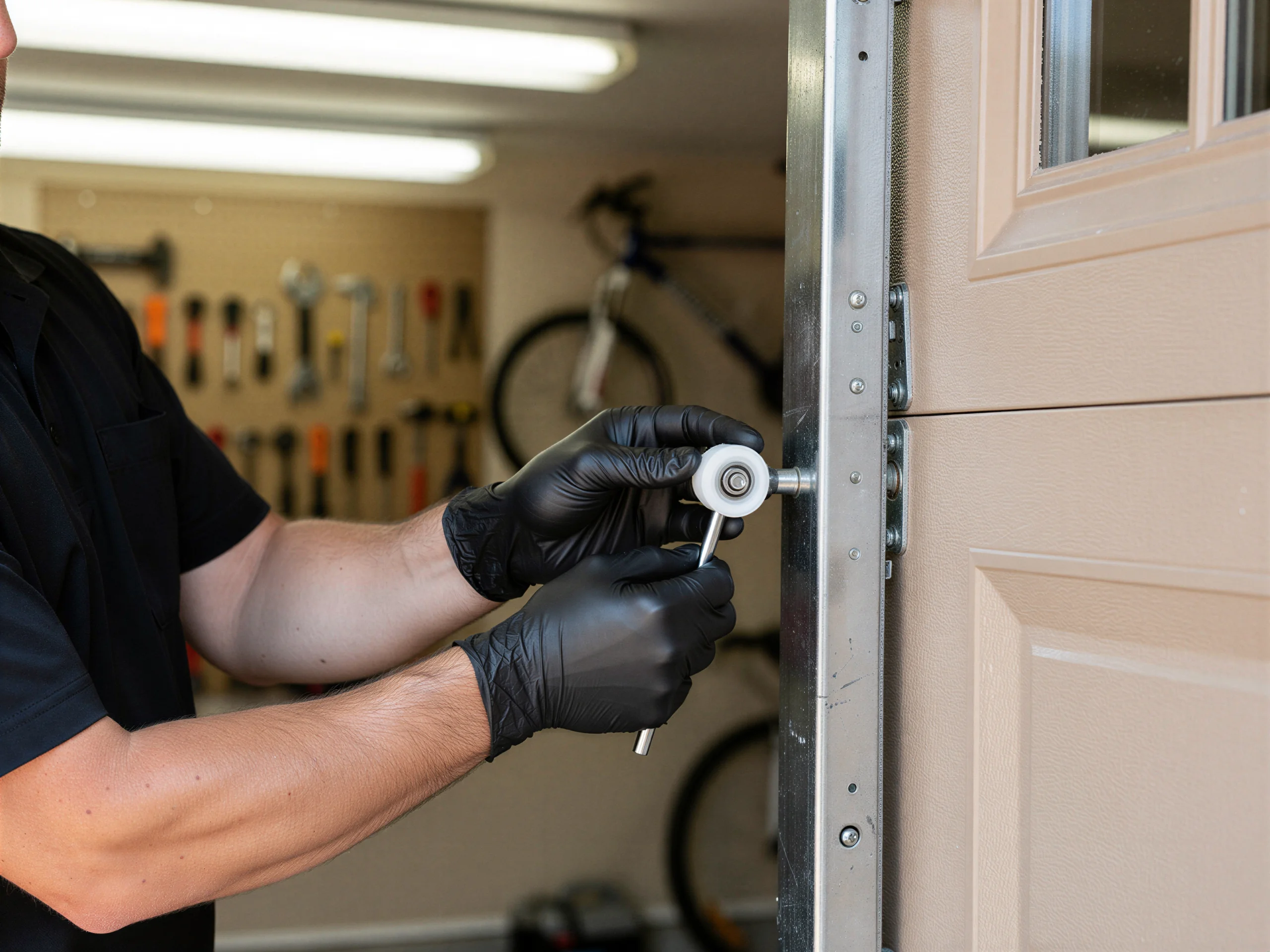
Extension spring setups complicate a repair in ways torsion systems don't. There are two springs instead of one, they're mounted along the horizontal track rather than over the header, and when a cable jumps the pulley on one side, the door can rack in the opening and jam the rollers against the track rail. On a two-car door, an uneven drop on one side puts twisting load on the whole panel assembly, and forcing the opener to keep trying is how you turn a $200 spring job into a cracked panel or a bent track that needs replacing too.
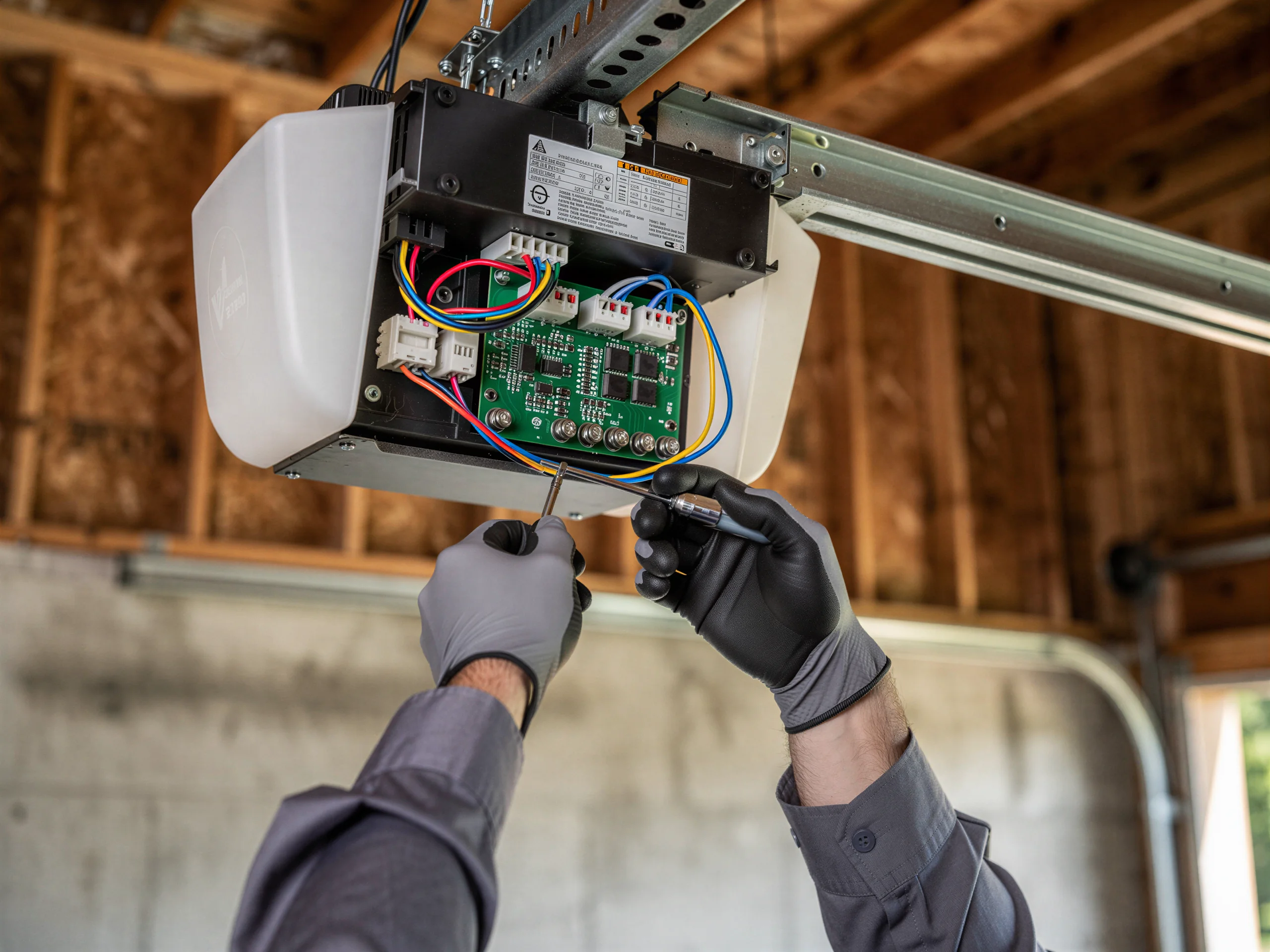
Another complication specific to stock this age: the opener itself may have been swapped out once or twice since 1975, but the track, drums, and header brackets are often original. Mismatched replacement parts from different eras don't always share bolt patterns or drum sizes, which is something we check before we order anything, not after.
Talk to a local pro
Garage door service in Salinas?
Same-day service with honest, upfront quotes.